

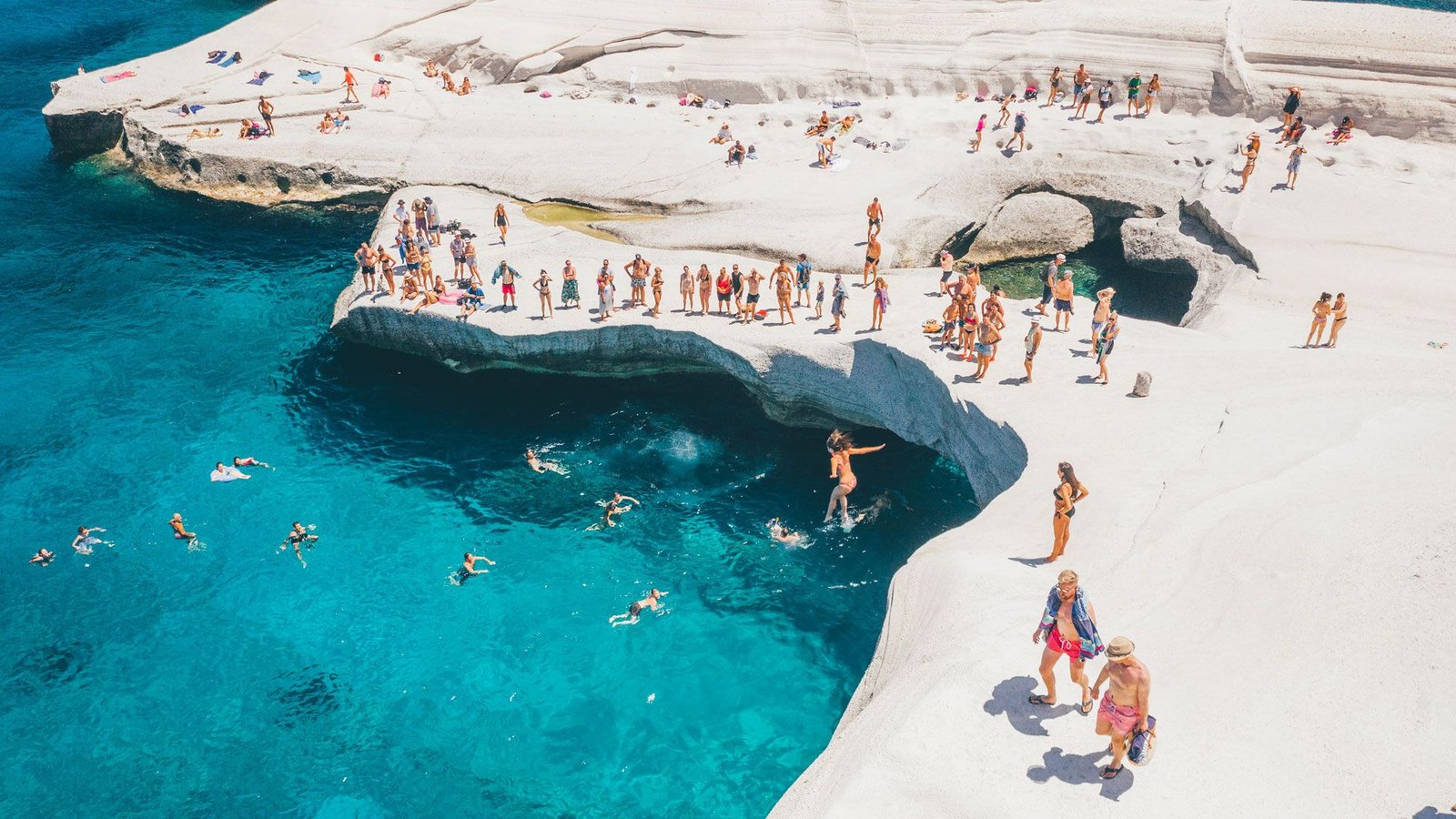
Sarakiniko Milos is one of the most distinctive natural landscapes in the Cyclades and one of the island’s most recognizable attractions. Its bright white rocks, smooth surfaces, and striking contrast with the deep blue Aegean Sea create an environment often compared to the surface of the moon. Unlike traditional sandy beaches, Sarakiniko Beach offers a different experience, where unusual geological formations and the island’s volcanic history take center stage. Visiting this remarkable location is an opportunity to discover another side of Milos and understand why its natural environment differs from that of many other Greek islands. From exploring the rock formations to observing the coastline, Sarakiniko reveals an important part of the island’s geological identity.
Where Is Sarakiniko Beach in Milos?
Sarakiniko is located on the northern coast of Milos, a relatively short distance from Adamas, the island’s main port. Visitors can reach the area by road and then follow a short walking route toward the distinctive white rock formations and the sea.
The location is better known for its rocky landscape than for having a large sandy beach. A small sheltered inlet lies between the white rocks, surrounded by natural surfaces that have been shaped by the island’s geological development over thousands of years.
The surrounding area offers several viewpoints from which visitors can observe the coastline and the unusual shapes of the rocks. These formations extend beyond the swimming area, making Sarakiniko particularly interesting for those who enjoy exploring natural landscapes.
Its position on the northern side of Milos also means that weather conditions can significantly influence the sea. Strong northerly winds may create waves and make swimming difficult, so checking the forecast before visiting is especially important.
Why Does Sarakiniko Look Like a Lunar Landscape?
The unusual appearance of Sarakiniko is closely connected to the geological history of Milos. The island belongs to the South Aegean volcanic arc and has developed through complex geological processes over different periods.
Sarakiniko is characterized by light-colored volcanic rocks that have been gradually shaped by wind, rainfall, and the sea. Over time, erosion has created smooth surfaces, curved formations, natural cavities, and unusual patterns across the landscape.
The bright white color of the rocks reflects sunlight intensely, while the limited vegetation reinforces the impression of an almost otherworldly environment.
These characteristics explain why Sarakiniko is frequently described as a lunar landscape. The comparison refers to its visual appearance rather than to any similarity in geological origin with the moon.
What makes the area particularly interesting is the way these natural formations change in appearance depending on the light and viewing angle. From certain perspectives, the rocks appear almost completely smooth, while from others, their layers, openings, and irregular shapes become more visible.
What Can You See and Do at Sarakiniko?
Visiting Sarakiniko is not simply about spending time beside the sea. The area offers opportunities for walking, observing geological formations, and photography, with different parts of the landscape revealing new perspectives.
As you explore the rocky surfaces, you can discover small cavities, natural passages, and viewpoints overlooking the open Aegean Sea. The contrast between the white rocks and the deeper colors of the water is one of the most distinctive features of the location.
The small inlet provides an opportunity for swimming when sea conditions are suitable. However, visitors should exercise caution, as some rock surfaces can become slippery and waves may develop unexpectedly.
It is also important to avoid jumping from elevated rocks into the water. Water depth and underwater formations vary throughout the area, and conditions are not always easy to assess from above.
For travelers interested in photography, Sarakiniko offers a particularly varied environment, where natural lines, shadows, and contrasting colors create different compositions throughout the day.
When Is the Best Time to Visit Sarakiniko?
The appearance of Sarakiniko changes noticeably depending on the time of day. Early in the morning, the sunlight is generally softer, allowing the curves and details of the rock formations to become more visible through gentle shadows.
Morning visits can also be more comfortable during the busy summer months, as the area is often less crowded than later in the day. This provides more opportunities to explore the landscape and take photographs without the pressure of larger visitor numbers.
Around midday, sunlight reflects strongly off the white surfaces, creating sharp contrasts between the rocks and the sea. However, the lack of natural shade can make spending extended periods outdoors uncomfortable, particularly during July and August.
Later in the afternoon, the light becomes softer again, changing the appearance of the landscape and creating different photographic conditions.
For visitors who want to explore the area comfortably, the early morning is often a practical choice. Regardless of the time, weather conditions should always be considered before planning a swim.
What Should You Know Before Visiting Sarakiniko?
Sarakiniko is a natural coastal environment rather than a fully organized beach. Preparing properly before visiting can make the experience safer and more comfortable, especially if you plan to spend several hours exploring.
Sun protection is particularly important because the white rocks reflect sunlight and natural shade is limited. A hat, sunscreen, drinking water, and suitable footwear for walking on rocky surfaces are recommended.
Visitors should also pay attention to the wind forecast. When strong northerly winds affect Milos, the northern coastline can experience significant waves, making swimming conditions less predictable.
Comfortable footwear is useful for moving across uneven surfaces, while extra care is needed near exposed rock edges and areas where the ground becomes slippery.
Respecting the natural environment is equally important. Sarakiniko’s formations are part of the geological heritage of Milos, and preserving them helps maintain the landscape for future visitors.
Avoid leaving litter, damaging rock surfaces, or disturbing the surrounding environment during your visit.
Sarakiniko and the Diverse Coastline of Milos
Sarakiniko is an excellent example of the geological diversity found throughout Milos. However, it represents only one aspect of the island’s remarkable coastline, where different locations display their own formations, colors, and natural characteristics.
At Kleftiko, for example, white rock formations create dramatic sea arches and caves, producing a coastal environment very different from the broad, smooth surfaces of Sarakiniko.
Elsewhere around Milos, visitors encounter colorful rock formations, sandy beaches, steep cliffs, and small coastal inlets. These variations reflect the island’s complex geological development and contribute to its distinctive appearance.
This diversity is one of the reasons why exploring Milos from both land and sea can provide a more complete understanding of the destination.
A visit to Sarakiniko allows travelers to observe the island’s geological character up close. Exploring other sections of the coastline by boat offers a complementary perspective, revealing formations and coastal features that may be difficult to appreciate from land.
The two experiences highlight different aspects of the same island and demonstrate how closely its identity is connected to its natural environment.
Sarakiniko: A Different Side of Milos
Sarakiniko in Milos is an exceptional natural destination where the island’s geological history becomes visible through the landscape itself. Its white rock formations, natural cavities, and contrast with the Aegean Sea create an environment that deserves to be explored carefully and without rushing.
Visiting Sarakiniko can form part of a broader journey around Milos, combining its beaches, traditional villages, and distinctive coastal scenery.
The experience also demonstrates that Milos is much more than a collection of beautiful beaches. Its geological formations, coastal variations, and relationship with the sea contribute to a landscape that changes considerably from one location to another.
For travelers who wish to complement their exploration on land with a different perspective of the island’s coastline, sailing experiences offered by Milos Sail Ways provide an additional opportunity to discover the natural character of Milos from the sea.