


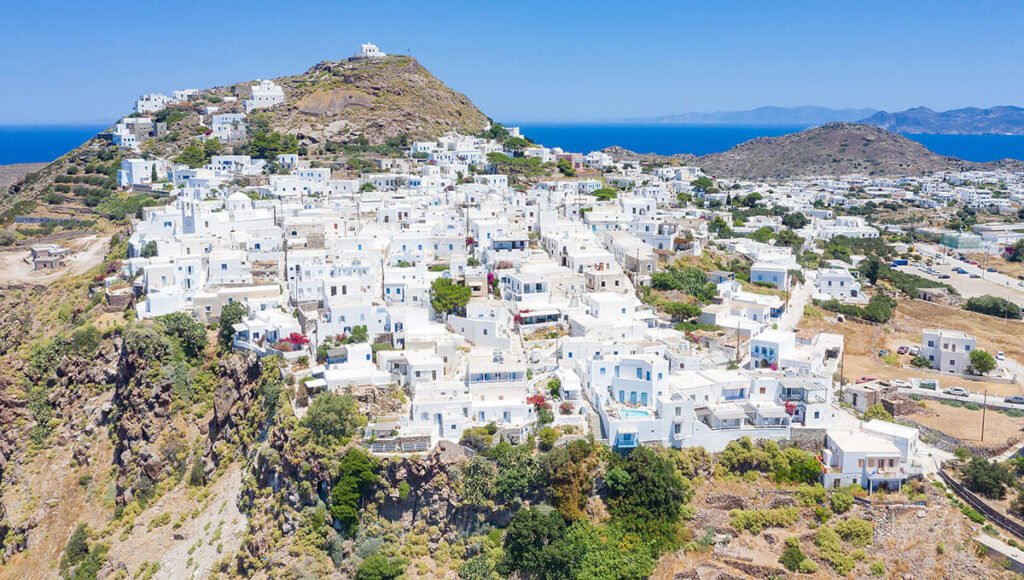
The Chora of Milos is one of the most characteristic parts of the island and is directly connected to the history, architecture, and everyday life of the Cyclades. Built amphitheatrically on the hill of Plaka, it offers a different image of Milos compared to the island’s seaside areas. The narrow alleys, whitewashed houses, and views over the Aegean create an environment that combines tradition and landscape. Exploring the Chora is not limited to a simple walk, but becomes a way to discover the character of Milos through its architecture, history, and position above the sea.
Where the Chora of Milos Is Located
The Chora of Milos is located in the area of Plaka, which is considered the traditional and historical center of the island. Built on elevated ground, it offers panoramic views over the Gulf of Milos and the wider coastline.
Its location was not chosen by chance. As happened in many Cycladic settlements, Plaka developed in a position that offered greater protection from pirate raids, away from direct exposure to the sea. Today, this position allows visitors to view the island from a different perspective, gaining a better understanding of the geography and morphology of Milos.
The Alleys and Cycladic Architecture
One of the elements that stand out in the Chora of Milos is the narrow alleys and the characteristic Cycladic architecture. The white houses, small passageways, and calm atmosphere create an environment that differs noticeably from the busier parts of the island.
Walking through the alleys, visitors encounter small courtyards, traditional buildings, and spots that reveal the settlement’s connection to its past. The structure of the Chora preserves many of its authentic characteristics while still maintaining its role as a living part of the island.
Exploring the area is not only about the views or photography, but also about experiencing the space itself, where architecture and landscape work together.
The Small Details That Stand Out in the Chora
Beyond the central points of Plaka, much of the experience lies in the small details of the settlement. The narrow passageways, traditional doors, and small balconies create an image that strongly preserves the Cycladic character of the area.
In many places, visitors come across corners that suddenly open to views of the Aegean, while other parts remain more enclosed and quiet. This constant alternation between open landscapes and narrow alleys is one of the elements that makes the walk through the Chora evolve naturally, without feeling repetitive.
The Most Characteristic Spots of the Chora
Among the most well-known spots of the Chora is the Castle of Milos, which is one of the highest points in the area. From there, the view over the gulf, the sea, and the surrounding villages offers a more complete image of the island.
The area also includes small churches, traditional passageways, and places with a strong historical character. Many of these locations are directly connected to the development of Milos through the centuries and help visitors understand how the island evolved.
Plaka also functions as a connecting point between the land and the view toward the sea, something that becomes especially noticeable during the afternoon hours, when the changing light transforms the colors of the landscape.
The Atmosphere of the Chora Throughout the Day
The image of the Chora of Milos changes noticeably throughout the day. During the morning and midday hours, the alleys remain quieter, allowing visitors to better observe the architecture and structure of the settlement. As the afternoon approaches, movement gradually increases and the area takes on a different rhythm, especially at the viewpoints overlooking the gulf.
Natural light strongly affects the appearance of Plaka, changing the shades of the buildings and the surrounding landscape. This variation creates an experience that does not remain static, but evolves depending on the time of day and the position within the settlement.
The View Toward the Sea and the Role of the Coastline
The Chora of Milos stands out not only for its architecture, but also for its relationship with the maritime landscape. From many points in Plaka, the view toward the gulf and the coastline reveals the island’s geomorphology and the importance of the sea in the everyday life of Milos.
This perspective helps visitors better understand the connection between the settlements and the natural environment. Milos is not an island defined only by its beaches, but a place where the shape of the coastline influences the overall visitor experience.
From the Chora, it becomes more evident how the sea functions as a central element of the island, both historically and today.
The Experience of Walking Through the Chora
Walking through the Chora of Milos develops differently from a typical tourist visit. Distances are short, allowing visitors to move around without rushing and observe the details of the settlement.
During the walk, the landscape changes constantly. Some points open toward the sea, while others create more enclosed and quiet corners within the alleys. This alternation makes the experience feel more natural and less “staged,” allowing visitors to see the Chora as a real part of the island’s life.
The Connection of the Chora to the Overall Experience of Milos
The Chora functions as one of the main places that helps visitors understand the character of Milos. From there, one can perceive the relationship between history, architecture, and the maritime element that defines the island.
This experience is completed when visitors also see Milos from the sea. Viewing the coastline from a different perspective reveals elements that are not visible from land and contributes to a fuller understanding of the landscape.
Conclusion
The Chora of Milos is one of the island’s most characteristic locations, combining history, Cycladic architecture, and views over the Aegean Sea. Walking through its alleys and traditional spots allows visitors to discover a different side of Milos, beyond its well-known beaches.
At the same time, its position above the sea highlights the important role that the maritime element plays in the overall experience of the island. For those who wish to combine land exploration with a different perspective of Milos, experiences such as those offered by Milos Sail Ways showcase the island through its connection with the sea.