


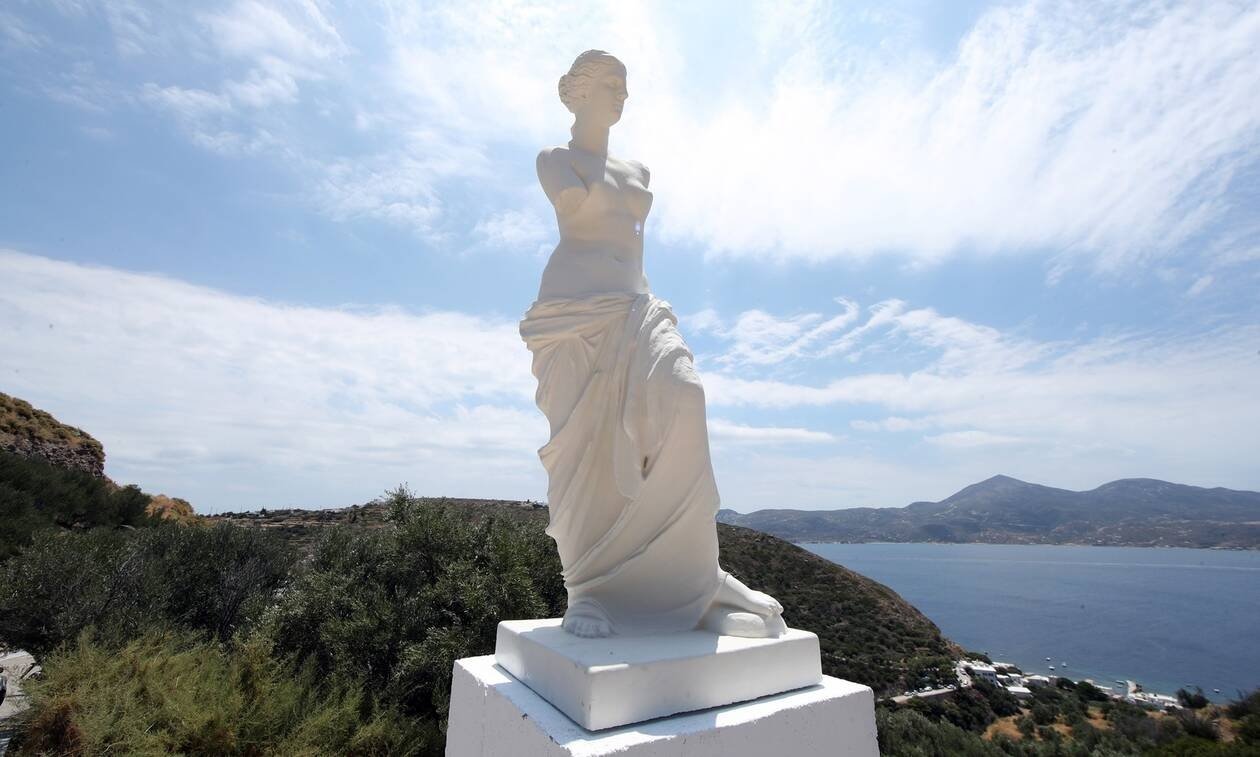
The Venus de Milo is one of the most recognizable sculptures of ancient Greek art and a symbol that has transcended time to become a global cultural reference. Although it is now displayed far from Greece, its identity remains deeply connected to the island of Milos, where it was discovered. More than just a masterpiece, it reflects the relationship between place, history, and artistic expression. Understanding the origin and journey of the Venus de Milo allows visitors to see Milos beyond its image as a summer destination, revealing a deeper cultural and geographical identity shaped over centuries.
The discovery of the Venus de Milo
The statue was discovered in 1820 by a local farmer in an area near the ancient ruins of Milos. It was found in separate pieces, a detail that reflects the long and complex history of the island and the transformations it has undergone over time.
From the moment it was uncovered, the sculpture drew attention for its artistic quality and its remarkable state of preservation. Despite missing its arms, the figure maintains a sense of balance and harmony that defines it as one of the most important examples of Hellenistic sculpture. The discovery of the statue established a permanent connection between Milos and one of the most famous works of art in the world.
Where it was found and what exists there today
The Venus de Milo was discovered near the present-day village of Klima, one of the most historically significant areas of the island. This location lies next to the ancient city of Milos, positioned directly along the coastline where land and sea meet.
Today, Klima is known for its colorful seaside houses, known as “syrmata,” which reflect the island’s traditional way of life. The area preserves a strong connection to the past, offering insight into how people lived in close relationship with the sea. Its geographical position highlights the importance of the coastline not only as a natural feature but also as a key element of daily life throughout the island’s history.
Beaches near the discovery site
Close to Klima, several coastal areas help illustrate the island’s landscape and character. Fyropotamos Beach stands out for its distinctive setting and traditional seaside houses, while the nearby village of Mandrakia offers an authentic atmosphere shaped by its fishing heritage.
This part of the coastline is defined by small coves, rocky formations, and natural variations that give Milos its unique appearance. These features become even more apparent when observed from the sea, where the full structure of the coastline can be understood. The proximity of these locations to the discovery site reinforces the connection between history and geography, showing how the island’s identity is shaped by both.
The journey of the statue to today
Shortly after its discovery, the Venus de Milo was transported out of Greece during a period when many important antiquities were moved to major European museums. This movement reflects the historical and political conditions of the time.
Today, the statue is displayed at the Louvre Museum, where it remains one of the most visited exhibits. Its presence there has contributed to its global recognition, while continuing to highlight its origin from the island of Milos.
Why the Venus de Milo is considered unique
The Venus de Milo stands out for its balance, natural posture, and timeless expression. The subtle movement of the body and the positioning of the torso create a sense of life and realism that distinguishes it from many other sculptures.
Even without its arms, the figure remains visually complete. The absence of certain elements does not diminish its value; instead, it adds to the sense of mystery that surrounds it. This combination of technical precision and artistic expression is what makes the sculpture unique and enduring.
Its connection to Milos today
The Venus de Milo represents an important part of the island’s identity. It highlights Milos as a place with historical and cultural depth, extending beyond its modern image as a tourist destination.
The geographical context of its discovery, close to the coastline, reflects the strong relationship between the island and the sea. This connection continues to define how visitors experience Milos today, influencing both movement and perspective across the island.
Milos as an experience beyond history
The story of the Venus de Milo serves as a starting point for understanding the broader identity of the island. Milos is shaped by its coastline, geological formations, and the interaction between land and sea.
Many of the island’s most distinctive locations are not fully accessible or visible from land alone. Viewing the coastline from the sea reveals patterns, formations, and perspectives that are otherwise hidden. This different point of view completes the overall experience of Milos, allowing visitors to engage with the island in a more comprehensive way.
Conclusion
The Venus de Milo remains one of the most important cultural symbols connected to the island. Its history, from discovery to its current location, highlights the significance of Milos on a global level.
At the same time, the island itself offers much more than its past. Milos combines cultural heritage with a unique natural environment, creating an experience that goes beyond individual landmarks. One of the most complete ways to understand this connection between history and landscape is by exploring the island from the sea, through experiences such as those offered by Milos Sail Ways, which reveal Milos from a broader and more integrated perspective.